
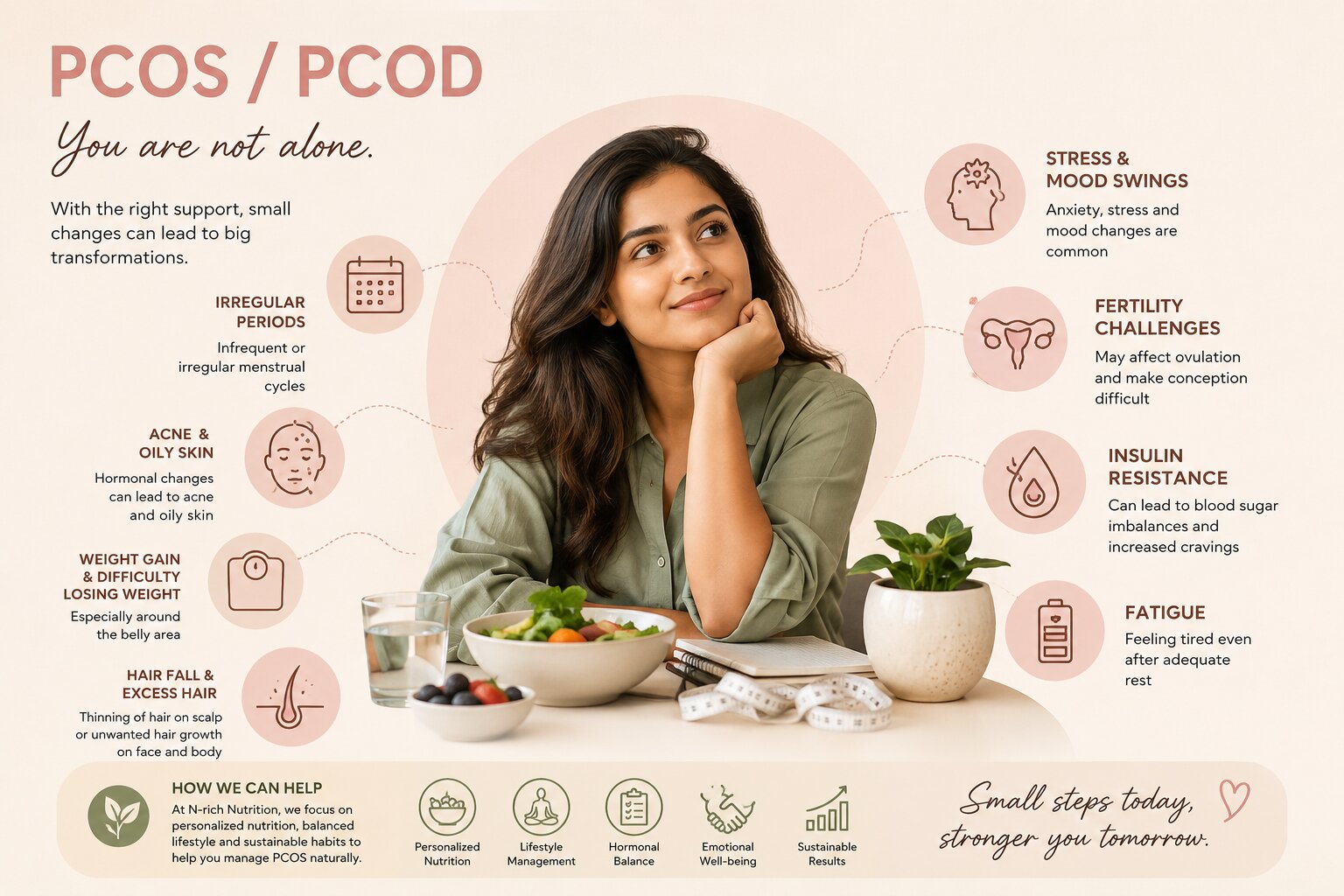
PCOS (Polycystic Ovary Syndrome) is a common hormonal and metabolic condition that can affect menstrual cycles, ovulation, androgen-related symptoms, metabolic health, fertility and emotional wellbeing.
PCOS does not look the same in every woman. Some women may experience irregular periods, acne or excess hair growth; others may struggle primarily with weight changes, insulin resistance, fertility concerns, fatigue or difficulty maintaining healthy routines.
That's why there is no single “PCOS diet” that works for everyone.
Global guidelines for PCOS highlight healthy lifestyle management as a cornerstone of treatment, prioritizing individualized targets, behavior-change techniques, and holistic support for mental health and quality of life. Crucially, these lifestyle enhancements offer significant health advantages, regardless of whether they lead to weight loss.
To address this, N-rich Nutrition provides tailored support that moves past generic meal plans. By assessing your unique symptoms, medical background, food habits, daily routines, physical activity, sleep patterns, stress levels, personal goals, and general wellbeing, we craft realistic nutrition and lifestyle solutions designed specifically for you.
We begin by understanding your individual concerns, health history, lifestyle, eating patterns, goals and challenges.
Rather than giving you a generic “PCOS diet chart,” we identify the areas where nutrition and lifestyle support may be most useful for you.
Your plan is designed around your:
The objective is to make healthy eating practical enough to continue, rather than perfect for a few weeks.
We focus on overall dietary quality and sustainable eating patterns rather than unnecessary food restrictions.
Depending on your individual needs, the plan may address:
There is no universal PCOS diet. The international guideline specifically does not recommend one particular diet composition over another for everyone with PCOS.
Nutrition is only one part of the picture.
We may work on:
Movement
Building sustainable physical activity according to your preferences and abilities.
Sleep
Supporting healthier sleep routines.
Stress management
Identifying lifestyle patterns that make healthy eating and consistency difficult.
Behaviour change
Using realistic goals, self-monitoring, problem-solving and relapse-prevention strategies. These behavioural approaches are specifically recognized in international PCOS guidance.
Progress isn't defined only by kilograms.
Depending on your goals, we may monitor:
The goal is to understand whether your overall health and daily habits are moving in the right direction.
The final goal isn't to keep you on a restrictive diet forever.
It is to help you develop skills to:
We don't want you to become dependent on a diet chart. We want you to become confident in managing your health.
PCOS (Polycystic Ovary Syndrome) is a common hormonal and metabolic condition that can affect menstrual cycles, ovulation, androgen-related symptoms, metabolic health, fertility and emotional wellbeing.
PCOS does not look the same in every woman. Some women may experience irregular periods, acne or excess hair growth; others may struggle primarily with weight changes, insulin resistance, fertility concerns, fatigue or difficulty maintaining healthy routines.
That's why there is no single “PCOS diet” that works for everyone.
Global guidelines for PCOS highlight healthy lifestyle management as a cornerstone of treatment, prioritizing individualized targets, behavior-change techniques, and holistic support for mental health and quality of life. Crucially, these lifestyle enhancements offer significant health advantages, regardless of whether they lead to weight loss.
To address this, N-rich Nutrition provides tailored support that moves past generic meal plans. By assessing your unique symptoms, medical background, food habits, daily routines, physical activity, sleep patterns, stress levels, personal goals, and general wellbeing, we craft realistic nutrition and lifestyle solutions designed specifically for you.
We begin by understanding your individual concerns, health history, lifestyle, eating patterns, goals and challenges.
Rather than giving you a generic “PCOS diet chart,” we identify the areas where nutrition and lifestyle support may be most useful for you.
Your plan is designed around your:
The objective is to make healthy eating practical enough to continue, rather than perfect for a few weeks.
We focus on overall dietary quality and sustainable eating patterns rather than unnecessary food restrictions.
Depending on your individual needs, the plan may address:
There is no universal PCOS diet. The international guideline specifically does not recommend one particular diet composition over another for everyone with PCOS.
Nutrition is only one part of the picture.
We may work on:
Movement
Building sustainable physical activity according to your preferences and abilities.
Sleep
Supporting healthier sleep routines.
Stress management
Identifying lifestyle patterns that make healthy eating and consistency difficult.
Behaviour change
Using realistic goals, self-monitoring, problem-solving and relapse-prevention strategies. These behavioural approaches are specifically recognized in international PCOS guidance.
Progress isn't defined only by kilograms.
Depending on your goals, we may monitor:
The goal is to understand whether your overall health and daily habits are moving in the right direction.
The final goal isn't to keep you on a restrictive diet forever.
It is to help you develop skills to:
We don't want you to become dependent on a diet chart. We want you to become confident in managing your health.